Fermentable Fibres and SCFA-Mediated Satiety Signals
Colonic fermentation pathways and how short-chain fatty acids trigger satiety peptide secretion from enteroendocrine cells.
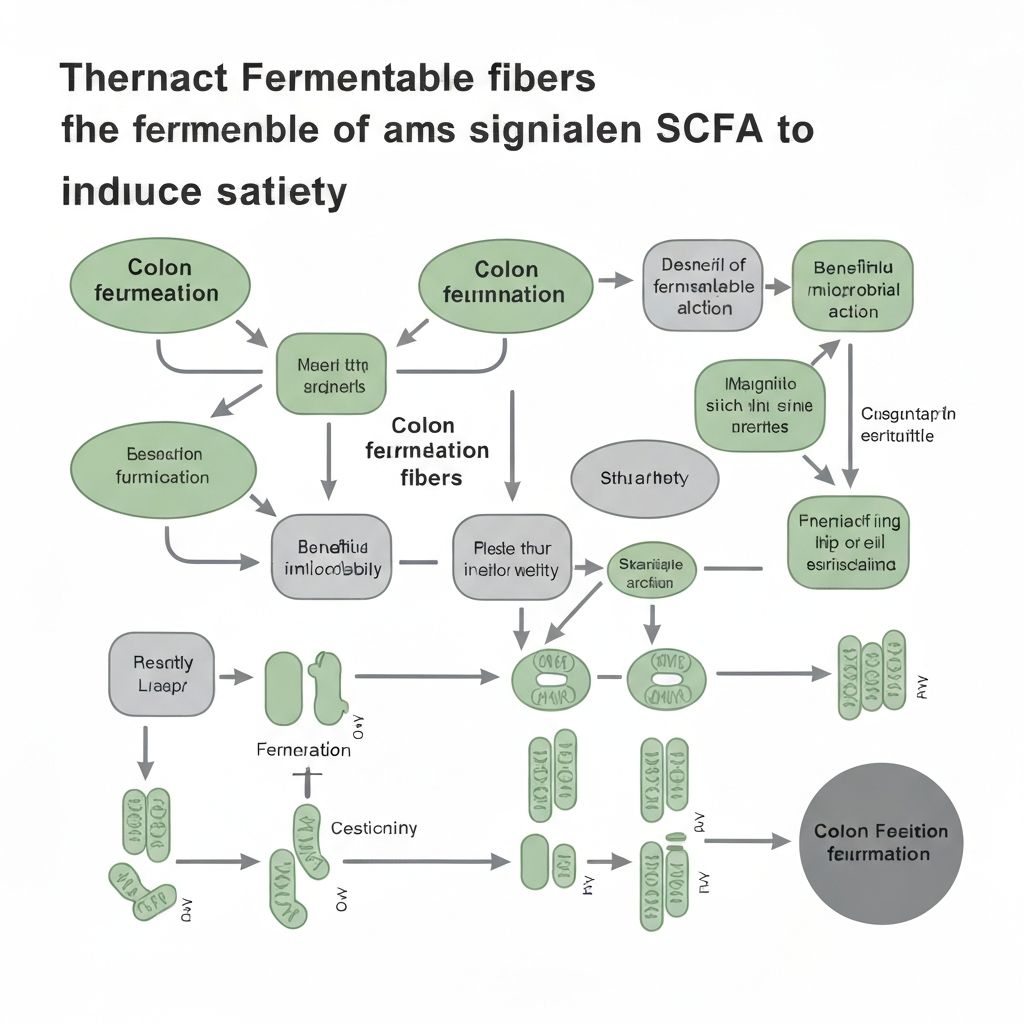
Fermentation Substrates and Bacterial Metabolism
Fermentable fibres resist enzymatic breakdown in the small intestine and reach the colon intact. There, commensal bacteria catabolise these polysaccharides through anaerobic metabolism, yielding short-chain fatty acids (SCFA) as primary end products.
Types of Fermentable Fibres
- Resistant starch: Retrograde or raw starch that escapes small intestinal digestion; readily fermented by Faecalibacterium, Roseburia, and Ruminococcus species
- Inulin and oligofructose: Plant fructans; preferentially fermented by Bifidobacterium and Lactobacillus (bifidogenic effect)
- Beta-glucans: Oat and barley polysaccharides; substrate for Bacteroides and Prevotella species
- Pectin: Fruit polysaccharide; fermented by Bacteroides uniformis and related species
SCFA Production and Composition
Bacterial fermentation of carbohydrates via the Embden-Meyerhof-Parnas pathway and other anaerobic routes yields three major SCFA:
| SCFA | Molar Proportion (typical) | Primary Bacterial Producers | Primary Tissue Utilisation |
|---|---|---|---|
| Acetate | 60–70% | Most anaerobic bacteria; versatile pathway | Colonocytes (energy); adipose tissue; muscle (lipogenesis) |
| Propionate | 15–20% | Bacteroides, Veillonella, Roseburia | Liver (gluconeogenesis); colonocyte energy |
| Butyrate | 5–10% | Faecalibacterium, Roseburia, Eubacterium | Colonocytes (primary fuel); modulates pH and barrier function |
Total SCFA production varies with fermentable substrate dose and microbial community composition. A typical serving of resistant starch (15–20 g) produces approximately 100–200 mmol total SCFA, peaking 4–8 hours post-ingestion.
SCFA Receptor Signalling Pathways
SCFA exert satiety effects through G-protein coupled receptors (GPCRs) expressed on enteroendocrine cells and colonocytes. The two primary receptors are:
GPR43 (FFAR2)
GPR43 is a free fatty acid receptor that exhibits higher affinity for propionate and acetate than butyrate. It is expressed on L-cells (GLP-1/PYY-secreting cells) in the distal ileum and colon. GPR43 activation induces calcium signalling cascades that trigger satiety peptide exocytosis. Approximately 60–80% of the satiety effect from SCFA is mediated via GPR43.
GPR41 (FFAR3)
GPR41 exhibits lower affinity for SCFA but is expressed on additional intestinal cell populations. It mediates metabolic effects (energy harvest) and may contribute to appetite suppression through indirect vagal signalling. Some evidence suggests GPR41 activation on colonic sensory nerves enhances satiety sensation via brainstem circuits.
GLP-1 and PYY Secretion Kinetics
SCFA-mediated satiety is primarily driven by two peptide hormones:
GLP-1 (Glucagon-Like Peptide-1)
GLP-1 is secreted from L-cells in response to GPR43 activation by propionate and acetate. It acts on GLP-1 receptors on pancreatic beta-cells (stimulating insulin), the brain (promoting satiety), and the stomach (inhibiting gastric emptying). The net effect is prolonged postprandial satiety sensation. GLP-1 has a plasma half-life of ~2 minutes due to rapid dipeptidyl peptidase-4 (DPP-4) inactivation, necessitating sustained fermentation for prolonged signalling.
PYY (Peptide YY)
PYY is co-secreted with GLP-1 from L-cells in response to butyrate and propionate. It acts on Y-receptor subtypes (Y1, Y2) on vagal neurons and central hypothalamic nuclei, suppressing appetite and inhibiting ileal motility. PYY has a longer plasma half-life (~90 minutes) and can produce more sustained satiety signalling than GLP-1.
The temporal profile of SCFA-mediated satiety differs from viscous soluble fibres: onset is delayed (4–8 hours post-ingestion) but duration is extended (6–12 hours). This creates a satiety "second meal" phenomenon whereby fermentable fibre consumed at breakfast influences appetite and energy intake at lunch.
Individual Variation in SCFA Production and Response
Not all individuals respond equally to fermentable fibres. Sources of variation include:
Microbiota Composition
Microbial capacity for specific fibre fermentation varies. Individuals with low levels of SCFA-producing bacteria (Faecalibacterium, Roseburia) demonstrate blunted GLP-1/PYY responses despite fermentation. This may be altered over 2–4 weeks through dietary selection.
GPR43 Expression
Genetic polymorphisms in GPR43 affect receptor signalling efficiency. Some individuals express higher densities of GPR43 on L-cells, producing amplified satiety responses to equivalent SCFA concentrations.
SCFA Absorption Efficiency
Colonocyte uptake of SCFA occurs via monocarboxylate transporters (MCT). Variation in MCT expression and intestinal pH affects the bioavailability of SCFA for receptor signalling.
Baseline GLP-1/PYY Secretory Capacity
Individuals with lower baseline L-cell function (potentially due to age, metabolic status, or prior dietary patterns) may demonstrate smaller absolute increments in satiety peptide secretion despite intact SCFA receptor signalling.
Evidence from Human Studies
Randomised controlled trials have quantified satiety effects of fermentable fibres:
- Resistant starch (15–20 g): 7–15% reduction in ad libitum energy intake at subsequent meal; significant GLP-1 and PYY elevations 4–8 hours post-ingestion
- Inulin (10 g): 5–12% reduction in hunger ratings; modest GLP-1 response; variable due to bifidogenic microbial growth lag
- Beta-glucan (5 g from oats): Combines immediate viscosity effects (gastric) with delayed fermentation-mediated effects (colonic SCFA). Total satiety effect: 10–20% energy reduction.
- Pectin (5 g): Rapid fermentation (peak SCFA: 2–4 hours); shorter-lived GLP-1/PYY elevations; total satiety effect: 5–10% energy reduction
Meta-analyses indicate that fermentable fibre satiety effects are slightly smaller in magnitude than viscous soluble fibre effects per gram but offer more sustained duration due to prolonged SCFA availability.
Adaptation and Tolerance
Chronic fermentable fibre consumption produces physiological adaptations:
- Microbial communities shift towards SCFA-producing phenotypes over 2–4 weeks, potentially enhancing fermentation efficiency
- GPR43 and GPR41 receptor expression may upregulate in response to chronic SCFA exposure
- L-cell density can increase in response to sustained SCFA signalling, potentially sustaining satiety effects
- Alternatively, habitation to chronic GLP-1/PYY signalling may reduce subjective satiety sensation despite maintained hormone elevations
Key Takeaways
Fermentable fibres produce satiety primarily through colonic bacterial fermentation and SCFA-mediated GPR43/GPR41 receptor signalling on L-cells, triggering GLP-1 and PYY secretion. This mechanism exhibits delayed onset (4–8 hours) relative to viscous soluble fibres but offers sustained duration and contributes to second-meal satiety effects. Individual responses vary based on microbiota composition, receptor expression, and baseline L-cell function. Understanding these mechanisms contextualises why identical fibre doses produce variable satiety outcomes across individuals.